
630 young people included in the club for digital education
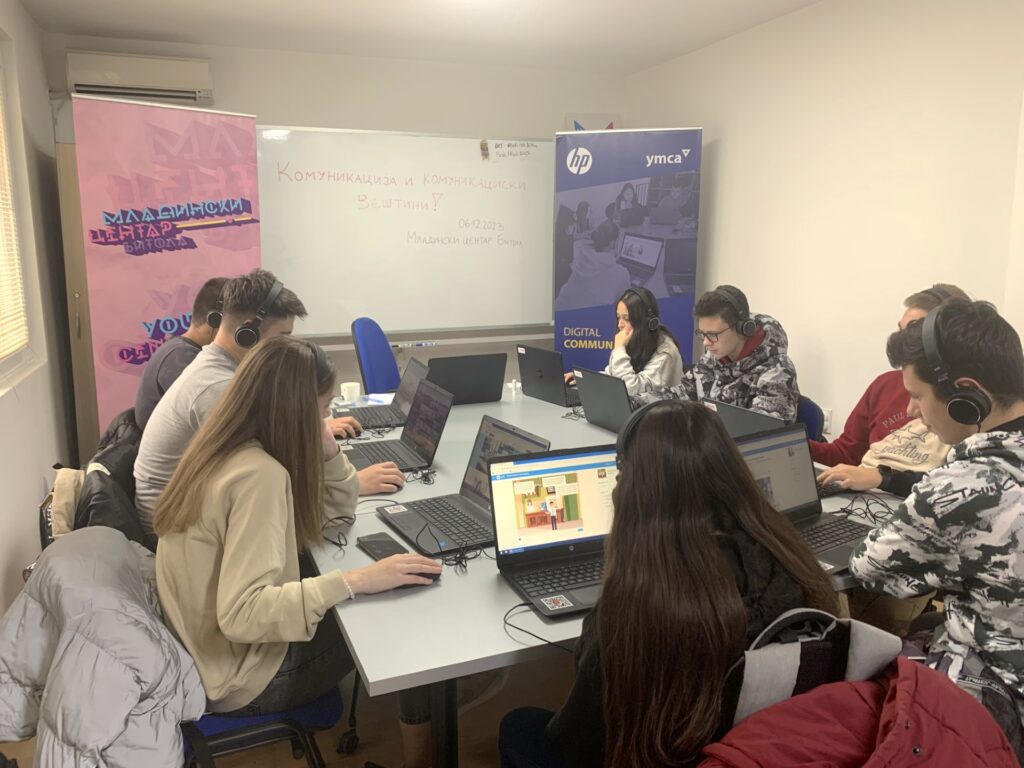
Latest News 630 young people included in the club for digital education Digital literacy, a skill that is now as important as reading and writing, is the ability of citizens to use computers effectively in their workplaces and in their daily lives. The ability to use devices for games and entertainment does not define digital literacy among young people. Digital literacy is much more than embracing new technologies, using social media, or creating and tracking photo and video content. It is the ability to use digital technologies to create, select and connect information from multiple sources, in multiple formats, and use them to improve effectiveness in any area – learning, work, etc. On 22.03.2023 we started with the first term for courses and so far we have 110 terms with a total of 630 participants (of which 50% are female and 50% are male), completed about 30 different courses from the categories of marketing, communications, finance and startup /innovations. After 9 months of delivering activities related to YMCA’s digital education courses in collaboration with HP, we would like to share with you some of the findings from the evaluations completed by the participants. We are happy with the feedback we receive from the participants who describe the courses as easy to follow, interesting, interactive, they would recommend them to their friends and almost all of them want to come again on a new topic. In the last several years across our country have been created a dozen of a youth clubs. This has been one of the most attended program! We are very happy with the impact we have created. In addition, are the answers of the participants about the difficulty of the course and their future involvement in it. In addition, we share some of the most frequent comments that were repeatedly shared regarding what they liked about the courses: About the HP Life courses: The subject of the course and the opportunity to learn new knowledge and skills. Practical knowledge that can be used in everyday life. The class was easy and understandable and the topic was relevant. The course was easy to understand and educational. The course was effective – I learned a lot of useful information in a short time. I learned new things that I didn’t know before. Easily acquired skills. I liked that there were free courses on the things that interested me. About the approach/methodology we used: Informal meetings and socializing with other participants while learning new things. The way the course topics were presented to us was interesting. Communication and interaction between participants. The professional approach of the lecturer, the way of presentation with examples, and the communication during the course. The approach of the staff and the course was quite easy and not boring. How the course was presented, and how easy it is to understand and give you confidence that if someone can achieve their goal then so can I. About the logistics and overall settings: How they welcomed us and everyone was kind. Very positive and relaxed atmosphere and energy to work. The equipment we worked on, the place and the room where the course took place. The room was warm, we had a good explainer, and it was very clean and nicely decorated. Read here impressions from some of the participants included in this program Read here impressions from some of the participants included in this program
National Youth Work Conference
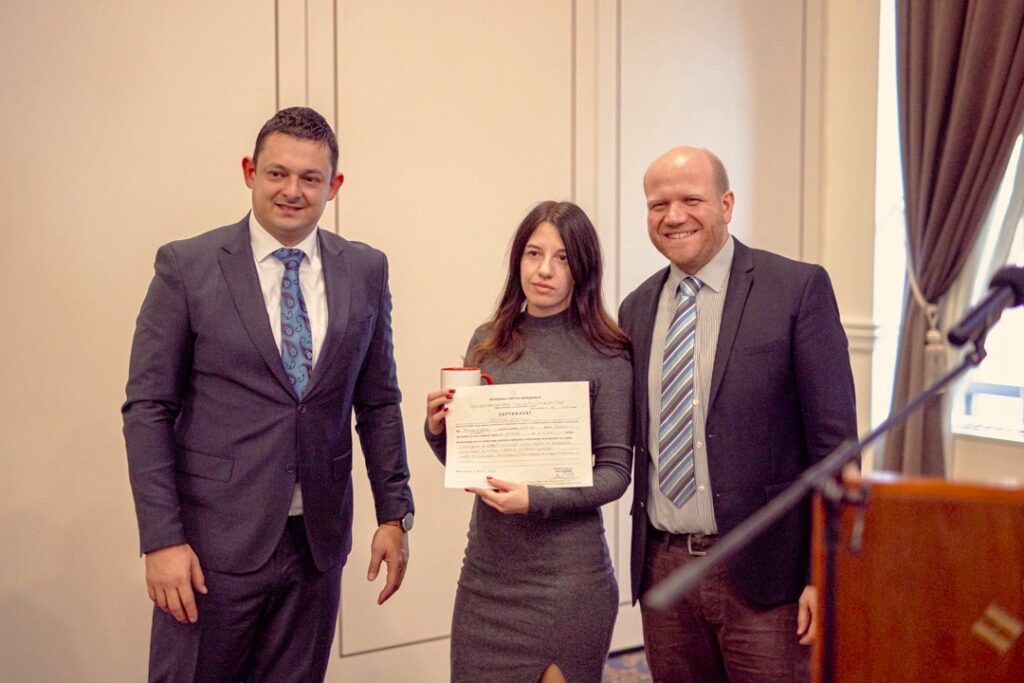
Latest News National Youth Work Conference On December 19, 2023 in Skopje the largest national conference on youth work in our country was held. In front of over 100 attendees, the event was opened by Andrej Naumovski, President of the Union for Youth Work, Naumche Mojsovski, Director of the Youth and Sports Agency, Gjorgi Tasev, Associate of the Prime Minister for youth and youth policies, and Jovica Mitevski, representative of The National Agency for European Education Programs and Mobility. At the conference, certificates were ceremoniously awarded to 13 people who passed the training and acquired the title of youth worker. Among them was Natasha Darkov, part of the YMCA Bitola team. The topics “Youth centers as a necessary service for young people” and “Youth worker as a profession” were discussed in two panels. The representatives of the state authorities and mayors announced continuous support for the validation processes and the full establishment of youth work as a profession and an incentive for the process of establishing youth centers throughout the country. The representatives of the youth sector including the Union for Youth Work, youth centers and youth workers emphasized that youth workers and youth centers are key to implementing quality youth work. Their recognition and support will also mean the creation of an environment to support the growth and development of young people. They also spoke about the importance of youth worker training and the youth worker profession for the proper development of young people. The representatives of other institutions supporters of the development of youth work in the country stated their support as well. Faculty of philosophy stated the support they provide through the second-degree studies in youth work that are the first postgraduate studies in youth work in the region for which are provided scholarships as well. GIZ emphasized the importance of cooperation and targeted action of foreign donors following youth work providers at the local and national level. The involvement of YMCA as an organization in these processes is at a high level. Jovce Krstevski, a certified youth worker, is part of the staff of the youth center in Bitola, he is a member of the base of quality evaluators of youth centers established at the Agency for Youth and Sports and was one of the panelists at this event. In addition to that, at the event Natasha Darkov, after a whole year of exceptional engagement with groups of young people, completed an intensive certification course for youth work, and received the formal title of “youth worker” from the Agency of youth and sport и Сојуз за младинска работа/Union for Youth Work. This year, Jovce Krsteski went through a process of training and practice for the application of the methodology for career counseling and guidance of young people ProfillPASS, which was developed by the German Institute for Adult Education – the Leibniz Center for Lifelong Learning Deutsches Institut für Erwachsenenbildung.
Youth Meaningful Work Survey

Latest News Youth Meaningful Work Survey At the World YMCA, we dream of a world where all young people can access decent jobs and meaningful work. To achieve that dream, we need to understand the views and experiences of young people.The YMCA is delighted to launch the “Youth Meaningful Work” survey, designed by young people for young people. What the survey involves:• The survey asks young people aged 18-35 all around the world what meaningful work means to them, and their hopes, fears, needs, expectations, and how ready they feel for work in the future.• The survey is open for 8 weeks, until Friday 15 December 2023 and takes about 10-15 minutes to complete. Why have a survey:By hearing the voices of thousands of young people across the globe, the survey will provide a strong evidence base to help design solutions for young people, with young people. We need your help:For our survey to be successful, we need your help in making sure we hear from as many young people from diverse backgrounds as possible across the world.• Complete the survey if you are aged between 18-35 – we want to hear about your career aspirations and experiences, and what you might need to achieve your aspirations. Access the survey through our website via this link: Youth Meaningful Work Survey• Distribute our survey – we ask that you distribute the survey widely by sharing the above link to young people, partners and across your networks, to help amplify the voices of young people within your local communities. Need more information?• See our website dedicated to the Youth Meaningful Work Survey. The website will provide tools and resources, responses to frequently asked questions, our communications kit and other supports, and will share videos posted by young people from all around the world!• For more information or support, please refer to our new website or contact the Global Meaningful Work project team at contact@youthmeaningfulwork.com. Thank you for your support of this important project.
Beginning of the peer school for mental health of children and youth
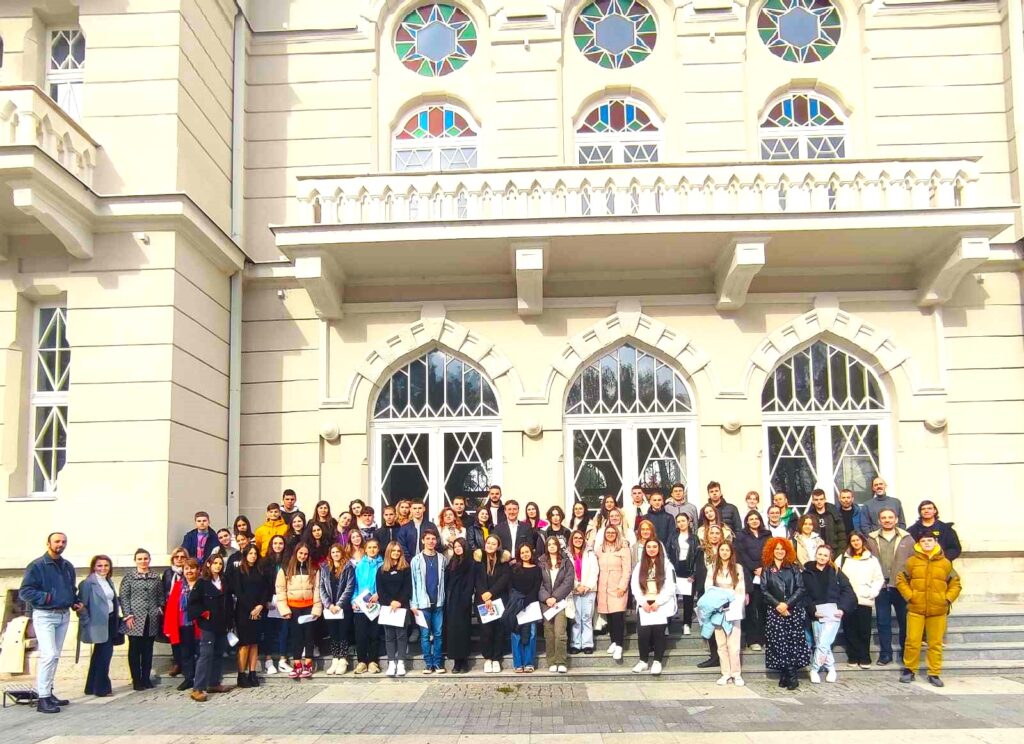
Latest News Beginning of the peer school for mental health of children and youth One of the most important elements of the project is the peer school itself, through which we plan to make a significantly large outreach of the topic of mental health. In the second half of September and October, we worked on the animation of the Bitola educational institutions with a focus on primary and secondary schools, as well as faculties. During this period we promoted the projects’ open calls and recruited elementary and high school students, as well as university students motivated to learn more about mental health for themselves and their peers in terms of recognizing certain conditions, but also how to act to help themselves and their peers from the community. We are done with this phase and it is time for action! Today’s event was just that. We gathered all peer educators, psychologists, pedagogues, and others from the professional services of the schools to mark the beginning of the project followed by an interesting program. The event introduced the participants to the planned activities and dynamics for the next period until the end of the school year. The distribution of peer educators’ groups was made based on age/generation and shifts of school to better plan the upcoming workshops in the direction of not missing and disrupting the regular teaching of schools and students. We formed five groups of peer educators, two of them with elementary school students, two with high school students and one with students. The groups had a series of tasks that they had to go through and familiarize themselves with the topic, get to know their peers with whom they will work in the next period, build their group identity and answer the introductory research on the topic to understand the their initial state on the topic of mental health. We also discussed the established channels of communication for the next period and all the formalities required for the smooth running of the upcoming workshops. The workshops will be based on the principles of non-formal education and will take place in the Youth Center in Bitola until the end of February. The peer educators will learn more and discuss with their peers about mental health covering topics such as: anxiety and depression, risky behavior, which means – violent behavior/peer violence, self-harm and substance abuse, building resilience and self-confidence among children and young people and the digital representation of the same topics related to the behavior of young people on social networks. The project has a follow-up phase in the second school semester where these peer educators will implement peer education workshops in their schools and faculties and share the gained knowledge with the end users/their peers in a non-formal setting. The project „Peer school for children and youth mental health“ of the Youth Association YMCA Bitola has been implemented in the frames of the regional program for local democracy in Western Balkans2 Reload2, financed by the European Union (EU), implemented by United Nations Development Program (UNDP). The project is co-financed by the Municipality of Bitola. The project has been implemented by the YMCA in cooperation with Poraka Nova and Amos. Read here to learn more about this project
Participation in Education Program for Support of Youth Workers in the Field of Career Guidance
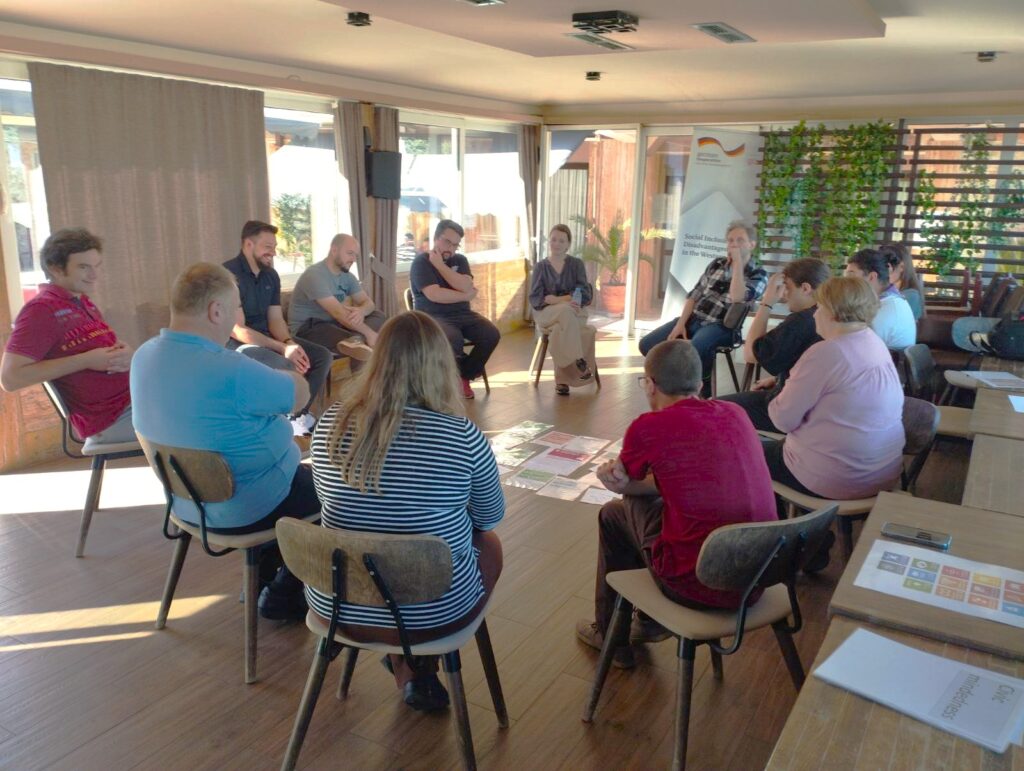
Latest News Participation in Education Program for Support of Youth Workers in the Field of Career Guidance Guided by the goal of offering better services for youth employment, we are happy that as a member of the Union for Youth Work we had the opportunity to participate in two trainings for counselors for career guidance of young people and to learn about two new methodologies. One of them was according to the methodology “ProfillPASS – Start your career!” and the other according to the methodology “Sport for employability” (S4E) as part of the program for education and support of youth workers entitled “Youth work for active and involved youth”. Through these trainings, I along with 17 other youth workers from our country acquired knowledge, skills and competencies for using proven methodologies in their daily work with young people from vulnerable categories. The youth workers were trained to use the “ProfillPASS” tool, which will allow them to direct young people to explore their possibilities for personal and professional development, thereby helping them to improve their position in the labor market. Using #S4E as a tool for encouraging and developing skills, will help youth workers in supporting and encouraging young people from their communities in the direction of awareness of their skills and potential, as well as their further development. After the training, the involved youth workers will carry out practical activities applying the learned methodologies in their environments. As a trained youth worker from the YMCA, I will apply my knowledge in working with young people in the Youth Center in Bitola, as well as in preparing the programs that the YMCA implements. The Union for Youth Work implements this program within the framework of the regional project “Social Inclusion of Vulnerable Groups in the Western Balkans” and the global program “Sports for Development” implemented by the German Society for International Cooperation (GIZ). The training for these methodologies was conducted on 21-24.09.2023 and 30.10-02.11.2023 in Dojran, Macedonia. The training for #ProfilPASS was conducted with the help of trainers from the Center for Lifelong Learning, and that for #S4E with the help of trainers from TACT.
Igniting our Mission in the West Balkans Initiative
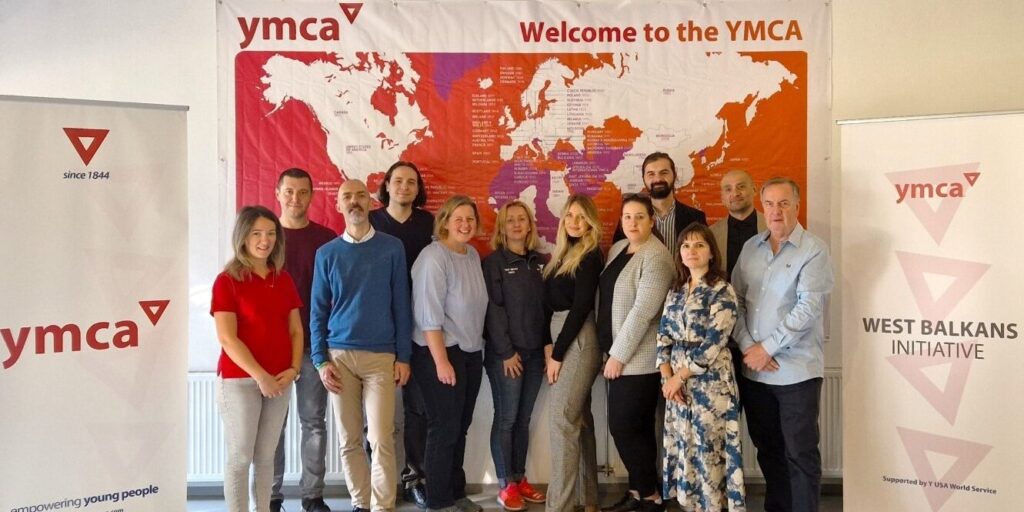
Latest News Igniting our Mission in the West Balkans Initiative From the 13th-16th of October, our representatives have been present at the West Balkan Initiative meeting, hosted by YMCA Kosovo. The program sessions were designed around the integration of the mission, and vision of the participating YMCAs from N.Macedonia, Albania, Kosovo and Serbia – and the establishment of a bright and flourishing future together within our movement. Besides the representatives of the West Balkan Initiative, the meeting had several YMCA guests who gave their contributions to the program such as Claudia Kuhn from CVJM (YMCA Germany) with inputs on the Program Development, Paul Smillie from the YMCA Europe Movement Strengthening Initiative with inputs on Governance Improvement, Marius Pop from YMCA Europe Strategic Partnerships with inputs of the collaborations with the corporate sector, Tom Valentine from YMCA of the USA with inputs of the perspectives and support for the region in future and Andy from YMCA Europe Communications Team. The program offered an incredible opportunity to exchange good practices, meet the local youth leaders, and visit YMCA centers across the country including the new Camp Pjetershan. Our stay was in the city of Peja with sessions and lunches held at the local YMCA – an impressive multi-functional facility that accommodates a variety of training programs and youth-oriented sessions. It has been a great opportunity to provide an update on each movement on their development during the initiative and plans in light of the promising partnerships and potential future activities. It has been a great time to remember all the values, memories, and experiences that brought together the leadership of the West Balkans Initiative – continuing to focus their work on regional plans, future steps, challenges, and opportunities for the upcoming year. In terms of achievements, it is worth mentioning that new municipality spaces and agreements have been acquired by some YMCAs, each YMCAs revenue has increased throughout the initiative, new partnership projects (within the region and Internationally have begun), extra focus on not just the leaders but staff and board members has been given. With over 20 digital meetings (team and 1 to 1) plus study visits to all participating YMCAs this year the region is slowly growing and heading in the right direction- with still much work to be done. And the crown jewel of our trip – Camp Pjetershan – an impressive YMCA camp accommodating 70 young people and offering wonderful facilities like sports and training facilities, camp halls and offices, camp dorms, campfire site- a space that can be used for multiple outdoor-oriented activities and a fine example of local, national and international support for a project. We have been inspired by this meeting, awed by the resilience and determination of the team, and the individual work of every participating YMCA that is creating change in their communities – and we are grateful to be part of it.
Mental Health. Deep dive on a grassroots level among young people and adults
Latest News Mental Health. Deep dive on a grassroots level among young people and adults Through peer-to-peer education in working with the youth and initiating support groups in working with adults, this project aims to install proven methods of work when facing challenging issues and/or topics. Peer-to-peer education plays a pivotal role in empowering youth and fostering community development, a mission that aligns seamlessly with our dedication at the YMCA and youth work. The dynamic exchange of ideas among youth not only cultivates a sense of ownership and responsibility among the young people but also encourages them actively to engage with their peers. In a formal context, this method of education can be a powerful tool for building leadership skills and instilling a sense of civic duty. When youth learn from their peers, they can connect on a deeper level, as they often share similar life experiences, challenges, and aspirations. What to expect: In the week ahead we are starting with an open call for peer educators. The workshops will be based on the principles of non-formal education and will take place in the Youth Center in Bitola in the period during the first school semester. The peer educators will learn more and discuss with their peers mental health covering topics such as: anxiety and depression, risky behavior, which means – violent behavior/peer violence, self-harm and substance abuse, building resilience and self-confidence among children and young people and the digital representation of the same topics related to the behavior of young people on social networks. The project has a follow-up phase in the second school semester where these peer educators will implement peer education workshops in their schools and faculties and share the gained knowledge with the end users/their peers in a non-formal setting. The second aspect is initiating the model of support groups in our city to create a more inclusive and supportive community in Bitola as an approach that has provided many benefits in countries across the world. Support groups play a crucial role in offering a lifeline to individuals facing various challenges. For individuals facing disabilities or some life difficulties, support groups foster a sense of belonging and reduce feelings of isolation and provide a vital source of emotional and practical assistance. They offer a safe and understanding environment where members can openly discuss their challenges, share experiences, and exchange coping strategies. These gatherings provide a safe space for individuals to share their struggles, aspirations, and personal stories to empower participants to face challenges head-on and build a strong support network that lasts a lifetime. Moreover, support groups for people with disabilities serve as a platform for advocacy and awareness. These gatherings amplify the voices of those who often face societal barriers and discrimination. What to expect: In the coming period two support groups will be established, one for the challenges facing single-parent families, and another for families of persons with disabilities who have a child or young person in education. In particular, these two vulnerable categories of people are at greater risk of mental health disorders and suffer more pressure from their fellow citizens and peers due to insufficient awareness of the problems they face (reduced social status due to poverty, stigmatization and avoidance, insufficient awareness). Due to that increased social pressure (which regularly finds support in the stereotypes and prejudices of the local community) and discriminatory behavior (not only between peers but also between older people, in the services, etc.), the probability of the problems they are already facing increases. These groups will involve the inclusion of parents (of the affected two categories of children) to share their experiences among themselves, with the peer educators and the professional services in schools. In addition, parents of peer educators and educated assistants will be invited, as well as other parents who will become familiar with our project through the Parents’ Councils in schools and will be invited to attend these groups. To implement this we have partnered with Poraka Nova and Amos who have experience in this impactful approach. These groups will meet and work at the Poraka Nova premises. An additional added value of influence from support groups both in terms of the project and for the city of Bitola will be the connection of the work of these groups with some of the services that are already offered at the level of the Municipality of Bitola for the prevention of social problems – those of single and one-parent families, as well as those related to the families of persons with disabilities. However, our project aims to call on civil society organizations to take a greater part in the future as well, through the Youth Center, which will enable educators of this type to network and cooperate, because this will strengthen their work and add to their recognition in the public. The project „Peer school for children and youth mental health“ of the Youth Association YMCA Bitola has been implemented in the frames of the regional program for local democracy in Western Balkans2 Reload2, financed by the European Union (EU), implemented by United Nations Development Program (UNDP). The project is co-financed by the Municipality of Bitola. The project has been implemented by the YMCA in cooperation with Poraka Nova and Center fo Human Rights Amos. Read here to learn more about this project
Consultants Training within the project “Measuring Impact: with, for and by youth organizations”
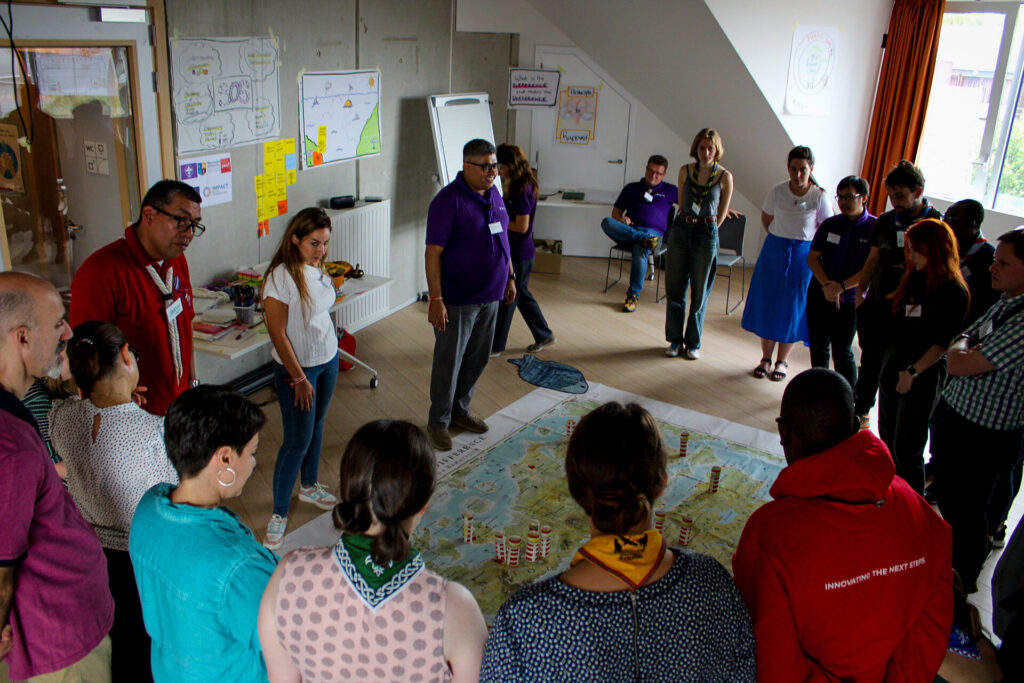
Latest News Consultants Training within the project “Measuring Impact: with, for and by youth organizations” The training took place 20-24 September 2023 held in the picturesque setting of Louvain-la-Neuve, Belgium and the 28 leaders from 25 different countries were equipped with research skills, necessary soft skills for organizing and running research as well as general consultancy skills. The participants were provided with an overview of various data collection tools, including, but not limited to surveys and focus groups; learnt the basics of sampling strategy; and learned the basics of data analysis tools. In addition to that, the training provided the participants with efficient communication skills (active listening, feedback, barriers of communication, the impact of assumptions, etc.), knowledge of the key personal development frameworks (DISC framework, systematic thinking, logical levels framework, etc.), develop teamwork and leadership skills (coaching, crisis management, problem-solving, public speaking), get to know the basic principles of change management, strategic approach, the dynamics of organizational culture and understanding social impact – a comprehensive curriculum designed to shape well-rounded consultants. The overall project aims to reinforce the links between policy, research and practice in the youth field by improving the level of evidence of the impact of youth organizations through a robust and recognized research methodology. The ambition of the project is to contribute to the implementation of the EU Youth Strategy by increasing the level of evidence in terms of societal impact and learning outcomes of youth empowerment activities provided by youth organizations. This collaborative initiative brought together a consortium of esteemed partners, including Scouterna, Les Scouts, Junák – český skaut, Scout Association of Macedonia, Scouting Ireland, YMCA Europe, YMCA Nederland, and Maynooth University.
Participants’ Impressions from the YMCA+HP Digital Education Program
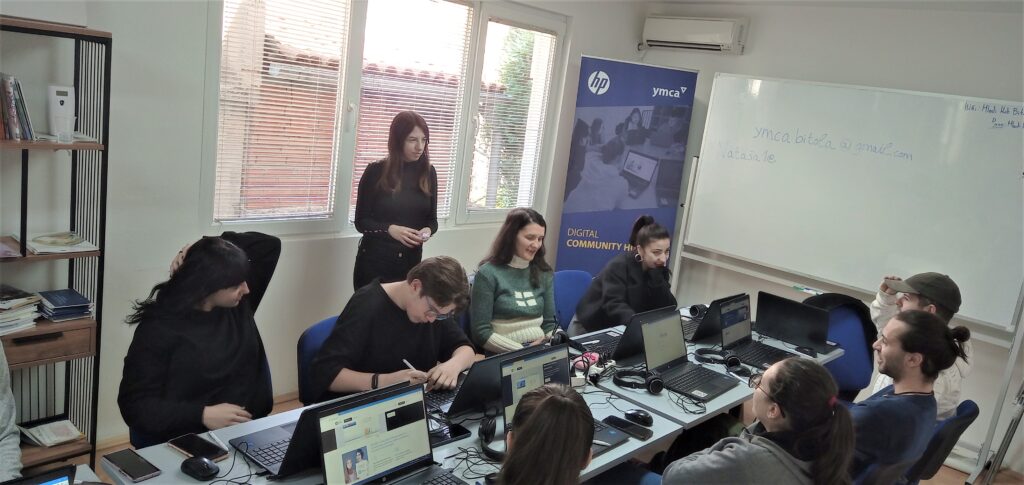
Latest News Participants’ Impressions from the YMCA+HP Digital Education Program Martha I am Marta from Krushevo, I am currently studying in Bitola. I found out about the courses through Natasha from the YMCA because we know each other from before. Today I attended the fifth course and in the future, I plan to attend several more courses. The courses are interesting to follow, and the atmosphere in the Youth Center is harmonious and pleasant. I plan to use the courses that I have followed so far and the experience I have gained from them for my career and development. Antim I am Antim Atanasoski, 18 years old from Bitola. I feel honored to participate in four courses made by HP and implemented in cooperation with the YMCA. One of the courses that I liked the most was Social Entrepreneurship, which was very practical and informative, unlike other courses of this type that I have visited online. What you learn from the course can be used practically every day of your life. Of course, I plan to visit other courses in the future, because there is a lot to learn from each course. Ljupco First I want to say that digital education is not just about new skills, it is most important to think about growth and embrace quality improvement. I am Ljupco from Bitola, I found out about the courses through the YMCA where I am a volunteer and have participated in many events and workshops organized by them. I just saw the application on social networks and immediately signed up without thinking if it would be interesting or if it would be useful to me, and to be honest I did not make a mistake! I attended five different courses in the categories of communications and marketing, as the most suitable subjects for me. I believe that every young person should study these courses, which will be very useful in life, in everyday life and the job search. I am currently working abroad, but after my return to Bitola, I will apply again for the courses, especially for the topics of innovation. YMCA and HP thank you for this opportunity you have given me, see you again soon! Elena Being employed and being a parent at the same time is much more difficult than it seems, I am Elena Ivanov, 28 years old, from Bitola. I have been in the YMCA for several years with short breaks. My job position is office manager. In the past years, we worked on non-formal education and organized summer camps, but after the great pandemic that happened, I can say that the HP courses are the best thing that happened at the YMCA. In addition to my daily duties, I still had the opportunity to take several courses on the subject of communications, which is what attracts me the most and I would like to share with you that the Business e-mail and Business Communication courses are courses you must attend. The courses are not long, the maximum time you will need is 1 hour. I would be very happy if you decide to attend these courses of the HP life program and of course, I want to thank HP and the YMCA for this great opportunity of free courses in our city. Philip Hello, my name is Filip Bozinovski and I am 17 years old. I want to say that I have completed all the courses of the HP Life project and I can say that I am quite satisfied. I learned about the HP Life courses from my high school “Josip Broz-Tito” from Bitola. Through these courses, I have acquired quite useful and good skills that I find myself in in the future. I desire to further study at a university whose task is to acquaint us with skills that use technology and help humanity. The courses are easy, short, entirely online, and above all, free. I would personally recommend these courses to all my friends and acquaintances as a starting point for acquiring useful computer skills that can help everyone, especially young people who are interested in starting their own business or upgrading their computer skills. Now, I have finished my last course, and as my favorites, I can single out the communication courses, as well as the Success Mindset course. I thank the YMCA as well as the HP because they provide conditions for a quick way of learning useful skills. Jana From my experience so far, I only know that digital education opens up a world of possibilities for me. My name is Jana, I live and study in France. I have a very busy schedule and I am very happy that I am in the right place at the moment where I have access to high-quality courses that help me to keep up with the latest trends in my 3D printing industry, all thanks to YMCA and HP courses. I had the opportunity to choose whether I wanted to listen to the course in English or French. I chose French, which is really of great importance to me. The courses are easy to understand, they are not long and the most important thing is that I also received a certificate for completing the course, and all for free! Guys, I hope that you will manage to find at least one hour a week and dedicate it only for you and you will improve yourself above all as individuals. YMCA and HP, thank you for the opportunity you gave me, see you again that is for sure! Read here to learn more about this project
Roots Peace Work Institute Reunion in The Holy Land
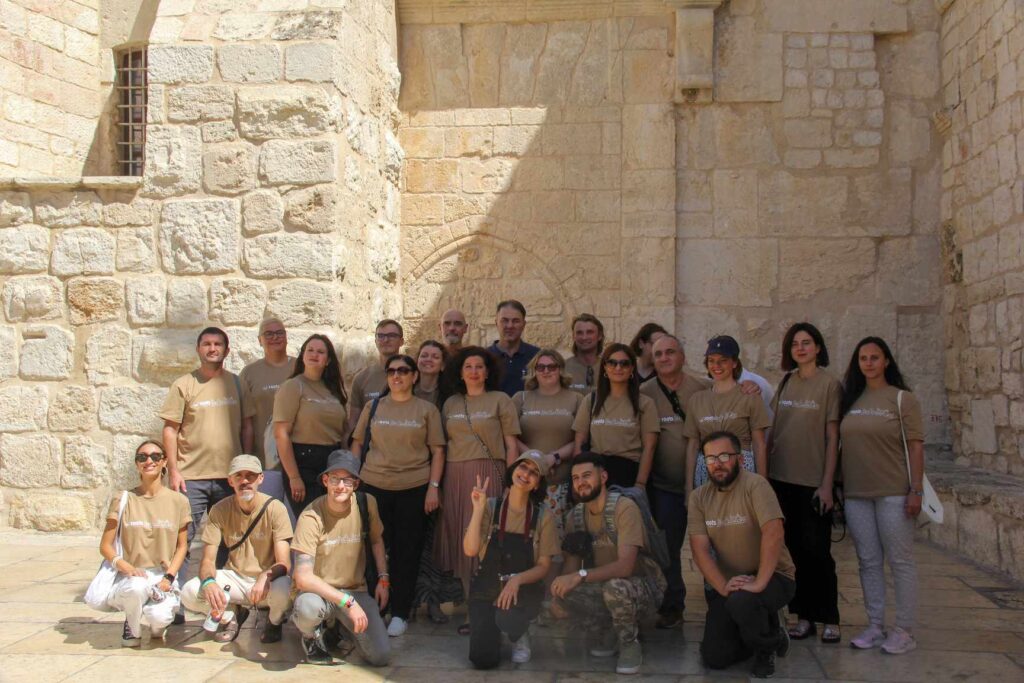
Latest News Roots Peace Work Institute Reunion in The Holy Land It’s been quite a while since my last participation in some of the Peace Work Institute sessions. As a 2015-year alumnus, I was invited to join this event to reflect on the previous period in terms of tools, methods and experiences. The venue for the event was the Holy Land which also provided additional learning context. Of course, I accepted the invitation and attended the event. 28 participants, more than 10 countries, 3 different cohorts and 1 week together. It was a privilege to work with Peace Education experts such as Wolfgang Heinrich & Ankica Dragan who have been involved in this program from the very beginning providing the know-how. This time it was the Roots Context Analysis with a particular focus on the impact and relevance of Peace Work Institute Scheme and run through the prism of Reunion participants. We have been blessed being welcomed and hosted with exceptional hospitality and care in each day and place by our friends from Bethlehem, Jericho and Jerusalem, representing both the East Jerusalem and Jerusalem International YMCAs. With not much positive narrative in the media for this region, I felt inspired to see and hear what the YMCA does for its beneficiaries in a very challenging context – generating skills, opportunities and hope for the entire community for almost a century. And all of it despite a wide range of limitations and restrictions – because the people in the YMCA believe in what they do. Maybe the best part of this event was meeting local people and hearing their stories. In many aspects I feel shocked and empathized with the challenges, conditions and lifestyle of the Palestinian people finding some common realities and history with our local people in my homeland. I felt grateful to be able to hear the stories of the other side of the coin. I feel privileged to attend the site visits: Bethlehem, Jericho, and Jerusalem, Nativity Church, River Jordan, Mount of Temptation, Al Aqsa Mosque, Holy Sepulchre Church and a myriad of sacred places. Following the footsteps of Jesus Christ and reflecting upon his life, journey, and sacrifice. Deeply humbling and impactful – giving so much meaning and motivation for what we do and how we live.
