
Real Stories, Real Growth: Peer School Participants Reflect
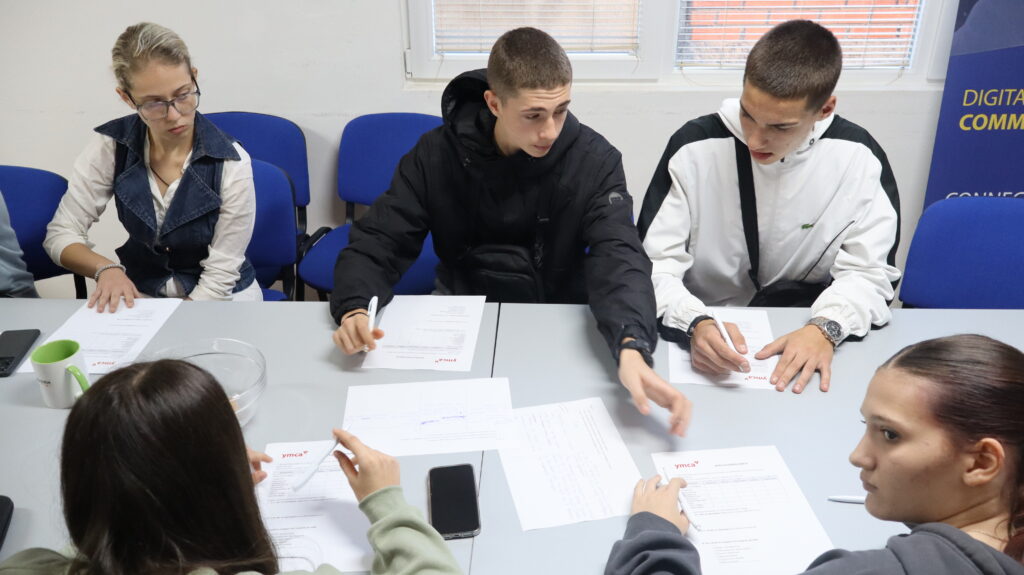
Latest News Real Stories, Real Growth: Peer School Participants Reflect Mila Nikolovski, Economic School Jane Sandanski When I first heard about this activity, I immediately felt great curiosity and excitement. I had positive expectations – that I would learn something new, meet interesting people and gain useful knowledge and experiences. What I liked the most was the teamwork and practical tasks, which were dynamic and fun. Through them, I learned new skills for communication, cooperation and critical thinking, and at the same time gained greater confidence in expressing my ideas. This experience helped me develop as a person, improve my social and organizational skills and get a clearer idea of my future goals. I can apply the acquired knowledge in everyday communication, at school, as well as when working in a team and making decisions in different situations. And young people who want to upgrade themselves and gain new experiences would benefit the most from such activities. I would certainly recommend such programs to everyone, because they contribute to personal development and practical knowledge. Sara Gruevska, Economic School Jane Sandanski I came to the peer school with expectations that I would have a good time and that I would learn many new and useful things, and those expectations were fully realized. The workshops were particularly interesting and interactive, and through them I gained new knowledge and insights that I did not possess before. This experience taught me true values and significantly contributed to my personal growth and self-improvement. I believe that the things we learned are fully applicable in everyday life and help us better deal with different situations. We, the participants, benefit the most, because through the activities we learn practical skills that are necessary for us in everyday life. Nektaria Ilievska, Gymnasium SABA Honestly, the peer school met and even exceeded my expectations. I liked the activities and games the most, because through them learning was interesting, active and fun. During the peer school I learned many new things and gained new knowledge and skills that will be useful to me in the future. I believe that what we learned is practical and applicable in real life, and I think that this type of school is most useful for high school students. Stefanija Dimitrijovska, Gymnasium SABA Before the peer school started, I had expectations to learn more information related to the world of career development. The most interesting part of the program for me were the games in which we actively participated and were constantly on the move. Through them, I learned new games and ways of cooperating with others. I believe that the school partially, but significantly, contributed to me in this area and gave me a clearer picture of the topic. The things we learned are applicable in everyday life and can be of great benefit to students in the seventh, eighth and ninth grades, as well as to students in the first, second and third years of secondary education.
The Third YMCA Peer School: Fostering Personal Growth, Communication and Career Guidance

Latest News The third YMCA Peer School: Fostering Personal Growth, Communication and Career Guidance Over the past three years, the YMCA Peer School has gradually developed as a space where young people learn to talk about topics that most often do not receive the attention they deserve within formal education. After one school year dedicated to mental health and another focused on peer violence, this year’s school combined the experiences from both previous years and focused on the questions that young people are increasingly asking – who we are, what drives us, and how to make informed choices for the future. Therefore, the focus was placed on personal development, values, and career guidance. The activities, led by Jovche Krsteski, youth worker and psychologist, were held in the first semester of the academic year at the premises of the youth center and included participants from seven high schools in Bitola. The Peer School was conducted through a series of workshops, organized into separate modules for personal growth and career development that build upon each other. The process began with exploring personal values, needs, and interests as a foundation for developing self-awareness. Participants reflected on what is important to them, what motivates them, and which factors influence their choices, as well as how these aspects affect their daily behavior and decision-making. Later, attention was directed toward the differences between knowledge and skills and their importance for personal and professional development, through which the young people recognized their own potential and learned that personal growth is not based solely on what we know, but also on how we apply that knowledge in various life situations. Communication and interpersonal relationships were identified as key components of personal development. Within these modules, participants explored communication styles, temperaments, and their impact on relationships with others. The work continued with topics related to conflicts, analyzing different strategies for resolving them and the connection between personal characteristics and reactions in conflict situations. In the later phase of the Peer School, the focus shifted to identity, personal vision, and long-term goals. Through creative and reflective activities, participants considered what defines them, which values guide them, and how these aspects relate to their future educational and career choices. The final modules were focused on taking initiative and preparing for peer education. Participants worked on planning and structuring presentations, adapting content for different groups of audiences, and developing confidence in public speaking. This part represented a transition from personal work to actively sharing the acquired knowledge within the school environment. The process was concluded with the awarding of certificates to participants who actively participated over the past months and carried out the planned peer activities. With this third Peer School, YMCA Bitola continues to build continuity in peer education and create a space where young people can develop, express themselves, and receive guidance and support in building their future. The project was supported by CVJM #SignsOfHope and the Municipality of Bitola! You can view the photos from the Peer School and peer education activities in the album below.
Beginning of the peer school for mental health of children and youth
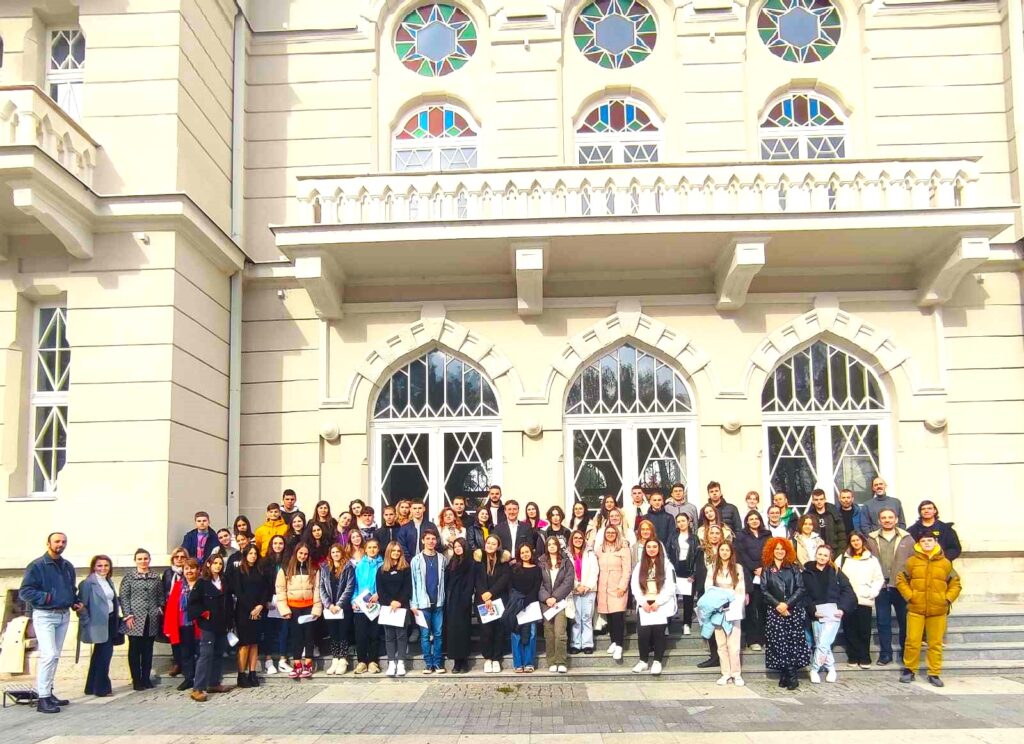
Latest News Beginning of the peer school for mental health of children and youth One of the most important elements of the project is the peer school itself, through which we plan to make a significantly large outreach of the topic of mental health. In the second half of September and October, we worked on the animation of the Bitola educational institutions with a focus on primary and secondary schools, as well as faculties. During this period we promoted the projects’ open calls and recruited elementary and high school students, as well as university students motivated to learn more about mental health for themselves and their peers in terms of recognizing certain conditions, but also how to act to help themselves and their peers from the community. We are done with this phase and it is time for action! Today’s event was just that. We gathered all peer educators, psychologists, pedagogues, and others from the professional services of the schools to mark the beginning of the project followed by an interesting program. The event introduced the participants to the planned activities and dynamics for the next period until the end of the school year. The distribution of peer educators’ groups was made based on age/generation and shifts of school to better plan the upcoming workshops in the direction of not missing and disrupting the regular teaching of schools and students. We formed five groups of peer educators, two of them with elementary school students, two with high school students and one with students. The groups had a series of tasks that they had to go through and familiarize themselves with the topic, get to know their peers with whom they will work in the next period, build their group identity and answer the introductory research on the topic to understand the their initial state on the topic of mental health. We also discussed the established channels of communication for the next period and all the formalities required for the smooth running of the upcoming workshops. The workshops will be based on the principles of non-formal education and will take place in the Youth Center in Bitola until the end of February. The peer educators will learn more and discuss with their peers about mental health covering topics such as: anxiety and depression, risky behavior, which means – violent behavior/peer violence, self-harm and substance abuse, building resilience and self-confidence among children and young people and the digital representation of the same topics related to the behavior of young people on social networks. The project has a follow-up phase in the second school semester where these peer educators will implement peer education workshops in their schools and faculties and share the gained knowledge with the end users/their peers in a non-formal setting. The project „Peer school for children and youth mental health“ of the Youth Association YMCA Bitola has been implemented in the frames of the regional program for local democracy in Western Balkans2 Reload2, financed by the European Union (EU), implemented by United Nations Development Program (UNDP). The project is co-financed by the Municipality of Bitola. The project has been implemented by the YMCA in cooperation with Poraka Nova and Amos. Read here to learn more about this project
