
Service Projects of GLOW & YMLP clubs (Autumn) 2017
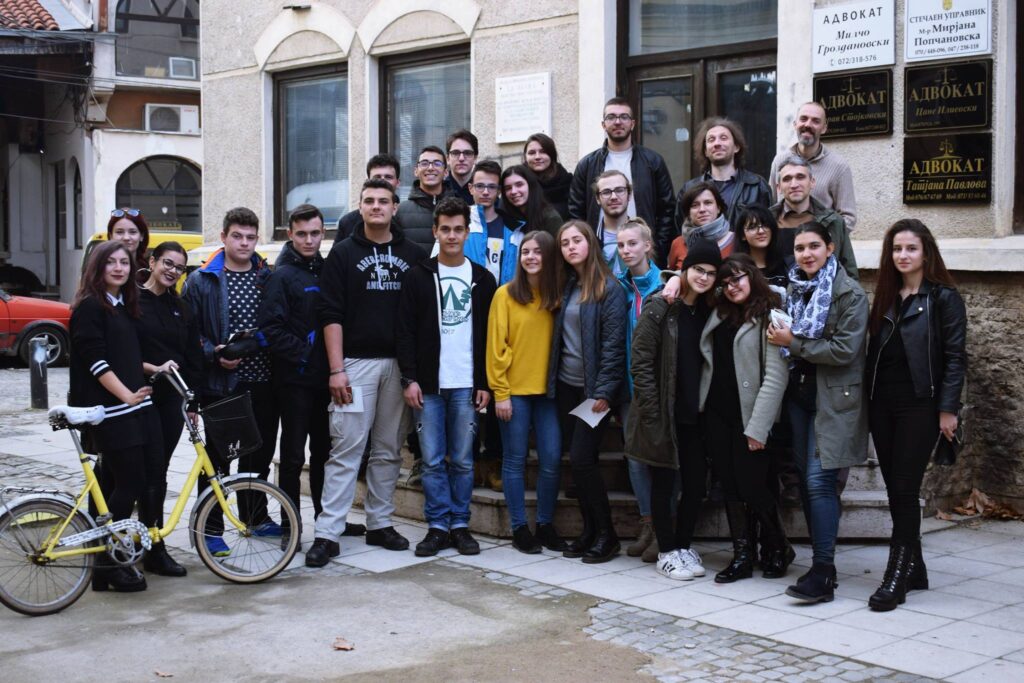
Latest News Service Projects of GLOW & YMLP clubs (Autumn) 2017 The Camp GLOW and Camp YMLP Youth Fund by YMCA Bitola provides opportunities for GLOW and YMLP Clubs throughout the country to implement the learned skills in service project on topic about design and management by writing a grant and implementing a project to improve their community, in the first round of grant applications, seven GLOW and YMLP clubs were awarded the grant based on their project proposals, written by youth leaders, in the areas of environment, civic engagement and arts. GLOW and YMLP Bitola plan to organize a 2-hour event for the environment involving a presentation together with the “BitolaNaTocak” initiative, about the pollution in the environment and the things we can do to stop it from spreading. The presentation will have a special focus on communicating to at least 50 youth how useful cycling is for people and the community. They plan to have some fun and interesting games to invigorate the participants, which will include games, for instance, the game “Do It by Yourself”, fun facts about bikes and the environment, music, and much more and will be held at Shirok Sokak in order to raise awareness and motivate the public to use greener transportation. GLOW Kriva Palanka is planing to improve the yard of the City Museum of Kriva Palanka, a local institution funded by the Municipality of Kriva Palanka – in order to support the museum’s current initiatives in exchange for supporting our clubs and events. GLOW Kriva Palanka will clean, sand and paint 13 benches in the museum yard and clean and renovate (pull weeds, pick up trash, fix) the museum playground. GLOW and YMLP Club Ohrid will promote an electronics recycling day for at least 11 schools in the Ohrid Municipality, NULA OTPAD DOO (NOD) (Zero Waste), a non-profit organization is authorized by the Government to collect and safely dispose all of the electronic equipment. This service, including the pick-up and transport of all items is offered at no charge. GLOW and YMLP Ohrid will create an efficient pick-up circuit and submit that information to NOD. GLOW Struga will hold a community event which will promote recycling among youth in their community. Their event will emphasize clean living through environment and physical activity by organizing games integrating sports and recycling and distributing Information about how to get involved. GLOW Struga is hoping to get 35 local youth motivated to get civically engaged in their local community through environmentalism and physical activity! GLOW and YMLP Tetovo is planing to hold an “Ancient Olympics” event promoting health and wellness for all children regardless of ability/disability in their community. The Ancient Olympics Fundralser will be designed to accommodate approximately 100 people, primarily students both with and without disabilities. including volunteers who will lead the sessions and activities. In order to incorporate history and a positive atmosphere, components of the ancient Olympics, such as an opening ceremony, traditions, decorations, art, and a closing ceremony will be included. Every participant will contribute with 100 denars, which will be donated to children in need through a local NGO. GLOW and YMLP Vinica will paint over the graffiti on the walls of the local park, giving the high school art classes students the opportunity to repaint the murals and beautifying the neighborhood for the community members who frequently visit the park. GLOW Club Debar will hold workshops for the local kindergarten in their community to encourage arts education and appreciation. The club will help 25 children to create paintings which will be put on auction and sold in the community to support families in need through the local Red Cross.
Corporate sponsor event
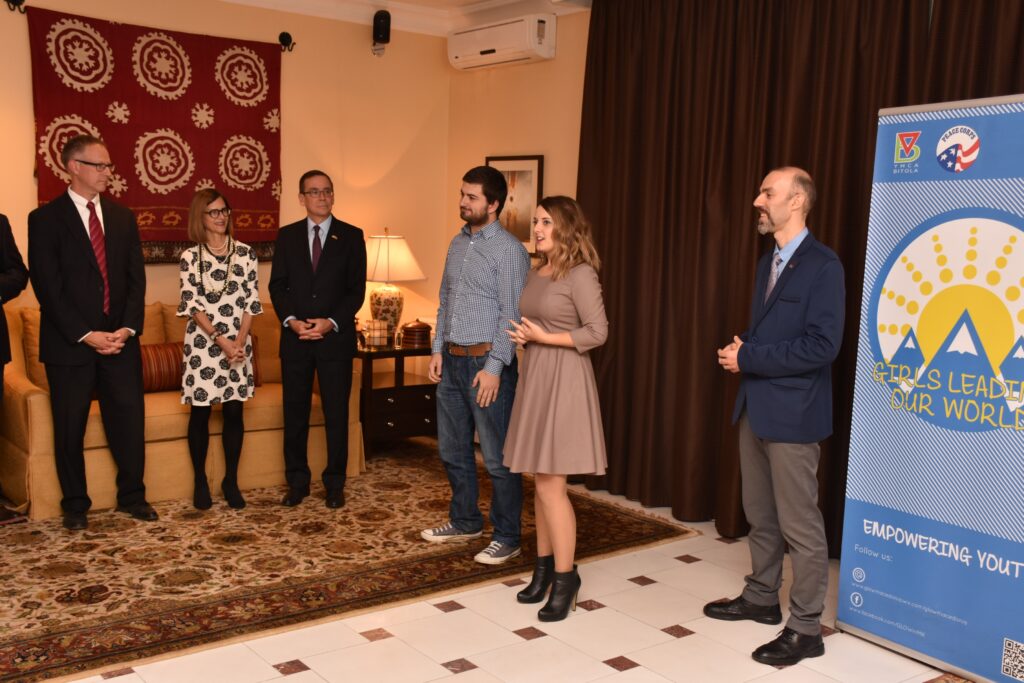
Latest News Corporate sponsor event Wednesday, October 25th 2017 YMCA Bitola in cooperation with the American Ambassador in Macedonia Jess Baily held the Annual corporate sponsorship appreciation event. The event focused on the impact made by the GLOW and YMLP Youth development program over the past year and our gratitude to our sponsors for their continued support. The event was held at the Ambassador’s residence. Ambassador Baily was introduced by the Peace Corps Director Mark Hannafin. He spoke about his past visits to GLOW and YMLP camps and the energy and determination of the youth he witnessed there. GLOW staff member and camp alumni Dijana Jovanoska, and YMLP Counselor in training Nenad Stojevski spoke about their experiences and growth within the GLOW and YMLP program, and thanked all the sponsors for their continuous support. Ioannis Geroulanos, CEO of OKTA, gold sponsor of the GLOW and YMLP Youth Development Program, spoke about the importance of youth development programs in Macedonia, his own positive experience in similar programs, and urged all present companies to invest in the program, explaining the value of corporate sponsorship to both beneficiaries: to the program itself and to the companies that choose to become partners. Viktor Iliev presented corporate sponsor appreciation awards: Gold sponsor OKTA, Silver sponsor Lynx Resources (SASA Mine), Bronze sponsors Alkaloid, EVN and Zdravje Radovo, and also the US Embassy, ELEM, TTK Bank, TAV Airports, and Vitaminka.
Improving camp standards in Finland
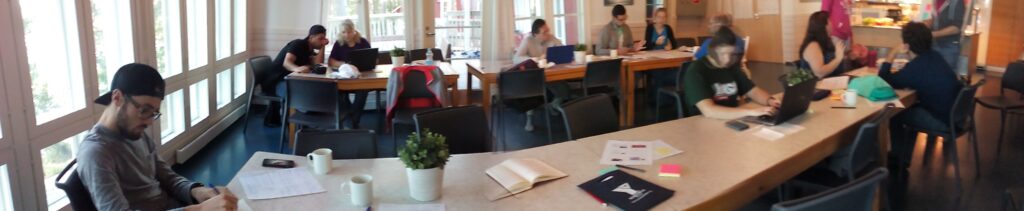
Latest News Improving camp standards in Finland This event is a continuation of the activities to agree on common standards for camps in YMCA Europe. Following the events organized by the YMCA of the Netherlands and the YMCA of Setubal, Portugal, the Finnish YMCA hosted a training conference for camp leaders with a focus on camp management. All these events now belong to a larger program of YMCA Europe called YMCA Camps in Europe. The training site is a residential camp of the Finnish YMCA located on the island of Harva, a unique, picturesque place in the Finnish archipelago, not far from the city of Turku. This project was funded mostly by the grant that YMCA Finland received from the Erasmus+ program and this training event was the main activity of the project that lasted from 31 May to 29 November 2017. Partners of the projects are YMCA in Estonia, Germany, Italy, Lithuania, Poland, Portugal, Republic of Macedonia, Romania and the Netherlands. In addition, we had trainers and participants from Georgia, Kosovo and the YMCA from the USA. We had a total of 40 people and that is the limit related to the capacity of the place. For that reason, unfortunately, this time we could not propose the participation of more YMCA movements. The guest from the YMCA, Mary Cambray, held a session. Our second guest from YMCA Camp Echo, Bernard Rocca is holding a session in Europe. There are many YMCA organizations with a long tradition of camping, which have an elaborate high-quality service, take a unique approach to children and young people, and their staff are trained within sophisticated systems. Most of the YMCA camps represent very high standards and are recognized as such by the communities. However, in most cases YMCA movements work separately and it is difficult to talk about common standards in organizing camps and training staff. This project is the next, very important step to join the facilities: a group of current or future camp managers will be trained in a common system, in fact they will shape this system. The YMCA of Finland is well placed to host this project: it has several good camps, experience in training volunteers and staff. But above all, they have dedicated young leaders who want to cooperate with their colleagues from other countries. The training program included topics that are characteristic of camp management: • strategic planning, administration. marketing, staff team building. However, we had workshops that were very relevant to contemporary issues involving the YMCA. One of them is diversity, which is also a matter of camp management in our case. Since the training took place in one place, the forms of several activities took advantage of the local specifics. We built a raft (and used it), sailed around the Archipelago, cooked and ate in an old mine and those who wanted to sleep outdoors in hammocks did so. Also, as a special Finnish contribution, from this event we will propose a form of support in a traditional Finnish way, which we want to apply in cooperation with the YMCA who are at the beginning of developing camp programs. This is called Talkoot – Support for YMCA Camps in Need.
6 Summer Camp Benefits
Latest News 6 Summer Camp Benefits For generations, children have spent their summers at day and sleep-away camps, trying new activities such as swimming, hiking, and various sports. But what many families may not realize is that camp provides children with different opportunities to develop important life skills that are difficult to achieve in any other environment. Below are just a few of the many benefits your children will gain from the summer camp experience. 1) Campers obtain the life skills needed to become successful adults. At camp, children gain valuable life skills. In fact,an organization called The Partnership for 21st Century Skills(comprising a group of business, education leaders, and policymakers) has found there is a large gap between the knowledge students learn in schooland the skills they need to be successful in the 21st century. After extensive research, the organization determined that some of the skills necessary to become successful adults are communication, collaboration, creativity, leadership,socialization and problem solving. All of these areas are fostered in the camp environment. Campers are always communicating with each other, either on the field or in the bunk, learning to work togetheras a team and as part of the camp community. They also get to be leaders at camp,whether through guiding a first-time younger camper or managing their camp Olympics team. Campers learn to navigate on their own and solve problems by themselves. The engage in many creative outlets, too. 2) Camp educates the whole child. There is more to learning than test taking and achieving good grades. Camp offers of the most powerful learning environments and can be a place where a child’s social education takes place. It provides children with the opportunity to try new activities. When children succeed at these activities, they build self-esteem. Children also build social skills and problem- solving skills by being part of a supportive community and partaking in activities together. Campers are challenged and encouraged to grow every day. 3) Camp allows kids to unplug from technology. Today’s children sprend more than 7.5 hours a day engaged with technology, which often takes the place of the vital hands-on activities and socialization opportunities. The majority of summer camps ban most technology, including TV, smart phones, tablets and personal computers. Taking a break from technology over the summer allows children to communicate face to face. 4) At camp, there’s plenty of time for play, which helps children with social and emotional development. Balancing school schedules, homework, and extracurricular activities doesn’t leave much room for play. The American Academy of Pediatrics (AAP) reports that free and unstructured play is healthy and essential for helping children to reach important social, emotional, annd cognitive developmental milestones. It also helps kids manage stress. Traditional summer camps give children plenty of play time, which leads to healthy emotional and social development. 5) Children can reinvent themselves at camp. Students often attend school year after year with the same peers, which can lead to labeling and being ‘’stuck’’ with a particular perception. A child may become known as studious, quiet, etc., when, really, he can be boisterous in another setting. Children who go to day or sleep-away camps meet a whole other group of people in a different environment. Often times, a child will break out of his supposed categorization if given the chance. Children get to reinvent themselves at camp and be who they truly want to be, which helps them to build confidence. 6) Camp promotes independence When children go to camp, they are given the opportunity to grow more independent. Whether for a day or an entire summer, separation from one’s parents means a camper has to learn to rely on himself and other trusted adults and peers. Separation from parents gives a child the ability to think independently, which builds self-esteem.
GLOW & YMLP Impact Summit 2016
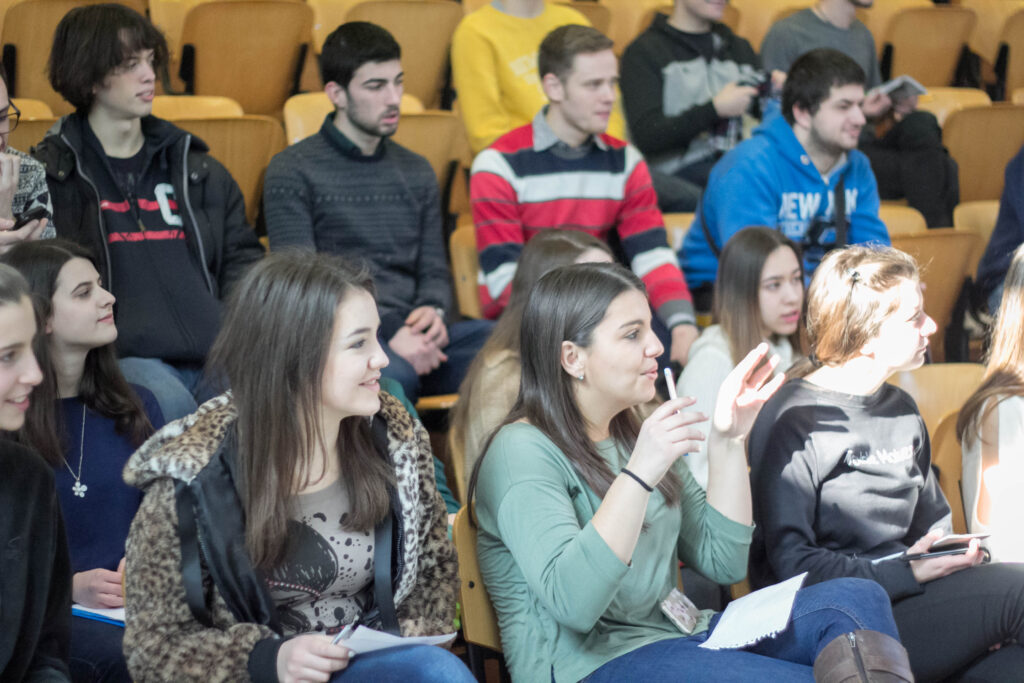
Latest News GLOW & YMLP Impact Summit 2016 On Saturday, the 28th of January NOVA International Schools hosted the January Impact Summit organized by the organizations ‘Girls Leading our World-(GLOW)’ and ‘Young Man Leadership Project- (YMLP)’. The goal of the event was to bring together staff and campers from the 2016 GLOW and YMLP camps to highlight the service the campers and staff completed in their home communities both in their local GLOW or YMLP club and alone. The event was also a great way to bring the stuff and campers together from GLOW and YMLP 2016 to catch up about what everyone has been doing since camp in the summer.
